New Molecular Tool Transforms How Clinicians Classify and Treat a Rare Blood Cancer
An international consortium, including key researchers from the Josep Carreras Leukaemia Research Institute, has developed and validated a comprehensive molecular ecosystem for chronic myelomonocytic leukemia that redefines disease classification, improves survival prediction, and guides life-changing treatment decisions, with unprecedented accuracy.
A landmark study published in the Journal of Clinical Oncology has introduced a molecular-based ecosystem that promises to substantially improve the care of patients with chronic myelomonocytic leukemia (CMML), a rare and aggressive blood cancer predominantly affecting older adults. The new system combines a novel disease classification system with a next-generation prognostic score and an AI-assisted decision support tool.
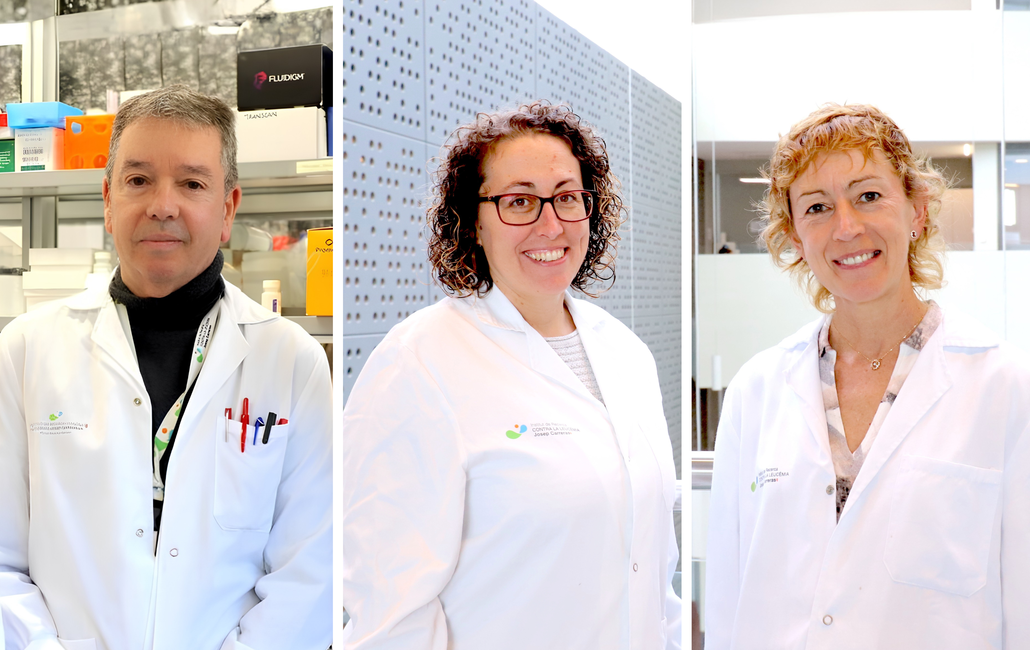
The work, conducted by the international CMML Prognostic Scoring System Alliance (iCPSS Alliance), used data from more than 3,500 patients across multiple centers worldwide and was co-authored by Dr. Francesc Solé, Dr. Laura Palomo, Dr. Blanca Xicoy, and Dr. Lurdes Zamora, researchers from the Josep Carreras Leukaemia Research Institute (IJC) and the Hospital Germans Trias i Pujol in Badalona, whose contributions to the genomic and clinical data underpinning this study were essential to its success.
A Disease Long Resistant to Precise Classification
CMML is a rare myeloid neoplasm that sits at the biological boundary between myelodysplastic and myeloproliferative diseases, a duality that has long complicated its diagnosis, risk stratification, and treatment. Patients face a disease course that is highly variable and difficult to predict: some remain stable for years, while others transform rapidly to acute myeloid leukemia (AML).
Despite dramatic advances in the genomic characterization of CMML, for over two decades clinical decision-making, including the critical question of whether and when to offer allogeneic stem cell transplantation, the only potentially curative therapy, has relied on prognostic tools that incorporate only limited molecular information. This study aims to change that.
A Molecular Map of CMML — and a New Scoring System to Match
The investigators analyzed genomic and clinical data from 3,013 patients in a retrospective training cohort and validated their findings in a prospective cohort of 516 patients. Using unsupervised clustering across 43 genes, they identified nine biologically and clinically distinct molecular classes of CMML, ranging from subtypes with favorable outcomes (defined by splicing factor mutations, with median overall survival exceeding 8 years) to high-risk classes which carry a median survival of little more than one year and very high rates of AML transformation (driven by biallelic TP53 inactivation or AML-like mutations, such as NPM1 and FLT3).
Building on this taxonomy, the consortium developed and validated the*International CMML Prognostic Scoring System (iCPSS)*, a new prognostic score that integrates mutations in nine genes alongside established hematologic parameters. Across all major clinical endpoints, iCPSS demonstrated superior prognostic discrimination compared with all existing risk models, stratifying patients into five risk groups with profoundly different survival outcomes.
Crucially, more than half of all patients were re-stratified when iCPSS was applied in place of the current standard molecular score (CPSS-mol). With the new stratification, 35% of the patients were downstaged and 20% upstaged, demonstrating that the new system captures clinically meaningful information that existing tools miss.
Transforming One of the Hardest Decisions in CMML: When to Transplant
The decision of whether and when to refer a CMML patient for allogeneic stem cell transplantation is among the most consequential and most contested in the management of this disease. Too early and a patient is exposed to unnecessary treatment-related risk; too late and the window for curative intent may be lost.
The iCPSS-guided decision support system substantially improved this determination. Among 829 transplanted patients in the retrospective cohort, receiving transplantation within the iCPSS-recommended optimal timing window was associated with a potential median survival gain of 2.2 years compared with transplantation outside that window (P < .001). In this simulation, the system reclassified 27.4% of patients from delayed to immediate transplantation recommendations, and 36.6% in the reverse direction, relative to the previous CPSS-mol–guided approach, a substantial shift with direct implications for individual patient outcomes.
A federated learning platform was also implemented, enabling participating institutions to collaboratively refine the model using real-world data without the need to centralize patient-level information, thereby meeting modern data governance and privacy standards while keeping the tool updatable as new evidence emerges.
The Role of IJC Researchers
The IJC's contribution to this landmark study reflects the institute's longstanding leadership in the genomic characterization of myeloid malignancies. Dr. Francesc Solé, from the IJC's Myelodysplastic Syndrome Group, contributed critical genomic expertise and patient data to the construction and validation of the CMML molecular taxonomy and the iCPSS scoring system. Dr. Laura Palomo, Dr. Blanca Xicoy and Dr. Lurdes Zamora, from the clinical hematology service at Hospital Germans Trias i Pujol, provided essential clinical cohort data and expertise in the management of CMML patients, ensuring that the resulting tools are grounded in and applicable to real-world clinical practice. Their participation is a further demonstration of the IJC's capacity to make high-impact contributions to international collaborative science in rare hematologic diseases.
A New Standard for Rare Cancer Research
"CMML has long been one of the most challenging myeloid malignancies to manage precisely because its biological heterogeneity was not adequately captured by available clinical tools," said corresponding author Dr. Matteo Giovanni Della Porta. "This ecosystem, the molecular taxonomy, the iCPSS, and the decision support system, gives clinicians, for the first time, a framework that is comprehensive, biologically grounded, and directly actionable at the bedside."
The iCPSS score is accessible via a freely available web calculator, with built-in handling of missing genetic data to facilitate adoption in centers without access to comprehensive next-generation sequencing. The authors emphasize that the molecular taxonomy and prognostic system are also intended to serve as a framework for clinical trial design in CMML, a disease where conventional trial approaches have been severely limited by the underlying biological heterogeneity of patient populations.
Publication
Lanino L, et al. (including Solé F, Palomo L, Xicoy B, Zamora L — IJC/Hospital Germans Trias i Pujol). "Molecular-Based Ecosystem to Improve Personalized Medicine in Chronic Myelomonocytic Leukemia." Journal of Clinical Oncology, 2026. DOI: 10.1200/JCO-25-02116